No ESI data
Skip to main content
surex logo
Start a quote
  • Car Insurance
  • Home Insurance
  • Condo Insurance
  • Tenant Insurance
  • Bundle
  • More Insurance
    • Motorcycle
    • ATV
    • Snowmobile
    • RV/Trailer
    • Business
    • Farm
    • Boat
    • Travel
    • Landlord
  • Blog
  • MySurex
  • MySurex
  • Car Insurance
  • Home Insurance
  • Bundle
  • Condo Insurance
  • Tenant Insurance
  • Motorcycle
  • ATV
  • Snowmobile
  • RV/Trailer
  • Business
  • Farm
  • Boat
  • Travel
  • Landlord
  • Blog
Surex Blog
  • Auto
  • Seasonal Vehicles & Recreation
  • Home & Condo
  • Tenant & Landlord
  • Commercial
  • Travel & More
  1. Home
  2. Blog
  3. Ontario G1 Licence Requirements and Restrictions
  • Auto
  • auto insurance

Ontario G1 Licence Requirements and Restrictions

Feb 5, 2026
5 min. read
Author
Insurance writer Steven
Steven Brennan
Editor
Jen Hart
Jennifer Hart
  • Auto
  • auto insurance
  • Facebook
  • Linkedin
  • X
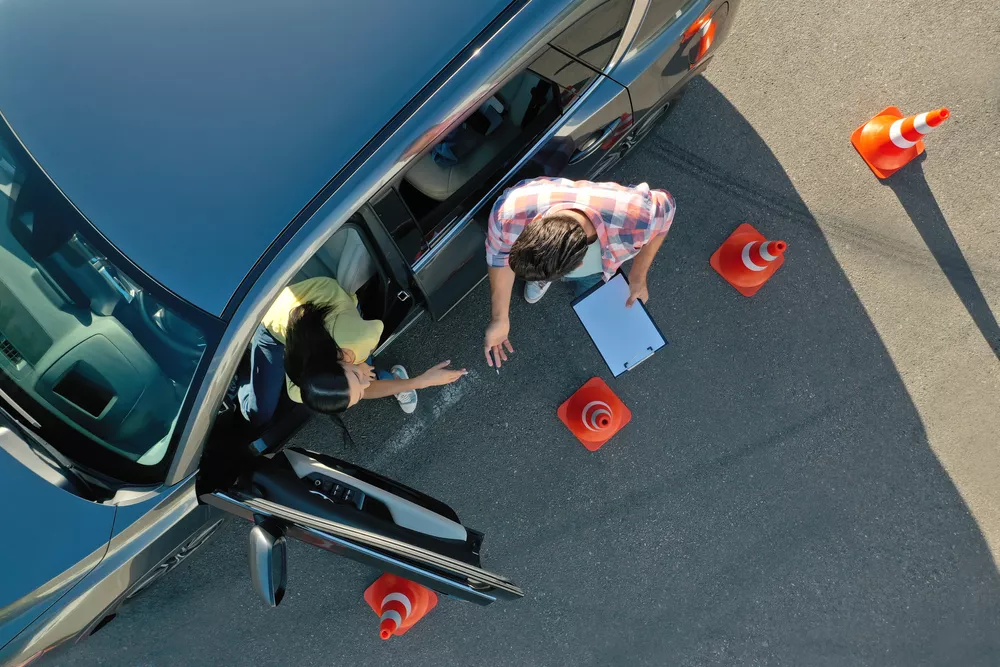
driving school car

Getting a driver’s licence in Ontario begins with the G1. It is the first stage of the province’s graduated licensing system, intended to give new drivers time to learn the rules of the road before driving independently. 

While a G1 licence does allow you to drive legally, it comes with strict conditions. These rules affect when and how you can drive, which roads you are allowed to use, and more.  

Understanding these limits is essential not only to avoid penalties, but to protect your future driving record and importantly, keep your insurance costs lower. 

How Ontario’s graduated licensing system works 

Ontario uses a three-stage graduated licensing system overseen by the Ministry of Transportation of Ontario. The system is designed to help new drivers gain experience gradually, starting in lower-risk conditions. 

The process begins with the G1 licence, followed by the G2, which allows independent driving with some restrictions. The final stage is the full G licence, which comes with unrestricted driving privileges. 

Most drivers must hold a G1 for 12 months before they can take the G2 road test. That waiting period can be reduced to 8 months if you complete a government-approved driver education course. After earning a G2, you’ll typically spend another 12 months gaining experience before qualifying for the full G licence. 

Drivers have up to five years from the date they receive their G1 to complete all stages. If the deadline is missed, the entire licensing process must be restarted. 

Who is eligible for a G1 licence in Ontario 

To apply for a G1 licence, you need to be at least 16 years old. Applicants are required to pass a vision test, as well as a written knowledge test covering Ontario’s traffic laws and road signs. There is no road test required at this stage. 

The G1 is available to Canadian citizens, permanent residents, and many temporary residents, too, provided you can present the required documentation.  

Applications must be completed in person at a DriveTest centre, where both the vision and knowledge tests are taken. 

Driving school

What you need to apply for a G1 licence 

Before visiting a centre, it’s worth taking the time to prepare well, study for the written test, and gather your required documents.  

Applicants need to present original identification that confirms their legal name, date of birth, and signature. If you’re a permanent or temporary resident, more than one piece of identification may be required. 

For the vision test, anyone who uses corrective lenses must bring them to the appointment. If the vision test is not passed, the written test cannot proceed until you’ve been assessed by an eye care professional. 

Keep in mind that there is also a standard fee of $159.75 for the G1 licensing package. This fee includes the written test and covers the cost of the future G2 road test.  

If you fail the G1 written test, it can be retaken for a small additional fee. 

What the G1 knowledge test covers 

The G1 knowledge test is based on the Official Ontario Driver’s Handbook. The test focuses on practical knowledge that every new driver is expected to understand before getting behind the wheel. 

Topics covered include reading traffic signs, right-of-way rules, speed limits, safe driving practices, and other basic rules of the road. The test is multiple-choice and usually takes about 30 minutes to complete. 

G1 driving restrictions in Ontario 

Once you receive your G1 licence, you are legally allowed to drive in Ontario, but only under specific conditions.  

First and foremost, as a G1 driver you must always be accompanied in your vehicle by a fully licensed G driver who has at least four years of driving experience. Your supervising driver must also sit in the front passenger seat.  

G1 drivers themselves are subject to a zero-tolerance alcohol rule, meaning any trace amount of alcohol in the system while driving is considered a violation, even if you are of legal drinking age. 

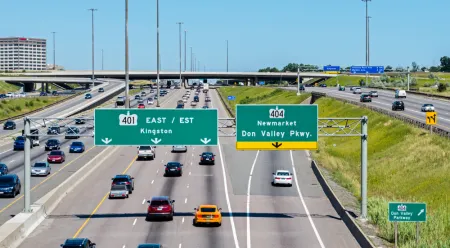
There are also limits on when and where a G1 driver may operate a vehicle. For example, G1 drivers are not permitted to drive between midnight and 5 a.m, neither are they legally permitted to drive on Ontario’s 400-series highways without a licensed driving instructor. 

All occupants must wear seat belts at all times under a G1 driver, and the number of passengers cannot exceed the number of available seat belts in the car. 

These restrictions are intended to reduce risk during the earliest stage of driving, when inexperience can often play a significant role in road collisions. 

Driving Test

Consequences of breaking G1 rules 

Violating G1 licence conditions can lead to escalating penalties: 

  • First conviction: 30-day licence suspension
  • Second conviction: 90-day licence suspension
  • Third conviction: licence cancelled, requiring the driver to restart the graduated licensing process and pay all associated fees again 

Beyond the immediate penalties, it's important to note that early driving violations can remain on your driving record for years, and lingering suspensions and convictions are likely to negatively affect insurance pricing once you move on to a G2 or full G licence. 

Demerit points and G1 drivers 

G1 drivers are subject to Ontario’s demerit point system, but the suspension thresholds are lower than they are for fully licensed drivers. That means that accumulating just six demerit points can result in a licence suspension at the G1 stage. 

In Ontario, demerit points will remain on your driving record for two years. 

Can you get car insurance with a G1 licence? 

In most cases, G1 drivers do not carry their own auto insurance policy.  

Because they are only permitted to drive under supervision, coverage typically comes from the policy held by the fully licensed driver who owns and insures the vehicle. Generally, insurers will not provide coverage directly to a G1 license holder. 

In many cases, a G1 driver can be added to an existing policy as a secondary driver. This is common for teenagers learning to drive in a family vehicle.  

Being listed on another driver’s policy early can help you establish an insurance history, but it may also increase your household premiums. Once a driver upgrades to a G2 and begins driving independently, insurance requirements and pricing will change. 

Buying a car with a G1 licence 

There is nothing in Ontario law that prevents a G1 holder from purchasing a vehicle. However, insuring that vehicle for regular use is more complicated. 

Insurance policies are typically issued in the name of the registered owner, and the primary driver must hold at least a G2 licence. As a result, most G1 drivers cannot insure a vehicle in their own name for driving purposes until they advance to the next licensing stage. 

Moving from a G1 to a G2 licence 

To graduate from a G1 to a G2, drivers must pass a road test that evaluates basic driving skills.  

The test can be taken after 12 months with a G1, or after 8 months if the driver completes an approved driver education program. 

Once a G2 licence is issued, drivers are allowed to drive without a supervising passenger and may access all Ontario roads, including highways. While some restrictions remain at the G2 stage, it represents a significant step toward independent driving. 

What new G1 drivers should keep in mind 

The G1 licence is intended to be a learning phase. The associated rules may seem harsh and firm, but the consequences for ignoring them can be lasting.  

Responsible early driving behaviour will affect not only how smoothly you move through Ontario’s licensing system, but also what kind of insurance costs you may face further down the road.  

Understanding the requirements and restrictions from the start can help new drivers avoid setbacks, and build a solid foundation for safe and confident driving. 

It can also be worth reviewing how new drivers are covered under your current household auto insurance policy. Making sure everyone is listed correctly can help prevent coverage gaps and unexpected costs. 

If you have questions about how a G1 or G2 driver fits into an existing policy, a Surex advisor can help explain your options and what to expect as your licence progresses. Learn more about car insurance in Ontario or start a quote today to compare coverage and rates with confidence. 

Insurance writer Steven

Steven Brennan

Steven Brennan is a freelance finance writer based in Vancouver, B.C., with five years of experience writing for Canadian and U.S. brands and agencies, including Money.ca, Crediful, Erika Kullberg, Loans Canada and more. He holds a BA and an MA from Maynooth University, Ireland.

Jen Hart

Jennifer Hart

Jennifer is the marketing specialist and content writer at Surex. Before transitioning to insurance and marketing, she built a journalism career in print and broadcast, freelancing for publications like Maclean’s Magazine and working in live production at Global News Toronto and CBC Toronto. As the industry evolved, she earned a Digital Media Marketing certification from George Brown College, allowing her to continue crafting compelling stories across digital platforms.
 

Share this article
  • Facebook
  • Linkedin
  • X

Related Articles

underground parking garage
  • Auto

New regulations will make Canadian cars harder to steal (and may lower insurance prices)

Canada plans to strengthen vehicle anti-theft standards to combat rising auto theft, improve security, and potentially help stabilize or lower insurance rates.

Feb 6, 2026
5 min. read
Read Article
Driver using a cellphone
  • Auto

The Cost of Distracted Driving in Canada

Distracted driving remains a major issue in Canada, costing $10 billion annually and causing many teen accidents, with cell phones and other activities contributing significantly.

Jan 19, 2026
6 min. read
Read Article
EV car dealership
  • Auto

Will Chinese EVs in Canada lead to lower car prices for Canadians?

Canada will allow Chinese EVs starting March 1, lowering tariffs from 100% to 6.1% with import quotas, potentially driving down EV prices.

Jan 19, 2026
6 min. read
Read Article
surex logo
  • Contact Us
    • support@surex.com
    • 1-855-MYSUREX
    • P.O. Box 100
    • Magrath AB T0K 1J0
  • Insurance
    • Auto
    • Home
    • Bundle
    • Business
    • Condo/Strata
    • Tenant
    • Farm
    • Travel
    • Motorcycle
    • Snowmobile
    • Trailer and RV
    • Boat
    • ATV
    • Landlord
  • Our Process
    • Why Surex?
    • How it Works
    • Find an Advisor
    • Carriers
    • File a Claim
    • FAQ
    • Our Insurance
    • Commission Disclosure
    • Payments
    • Valued Partners
    • Sitemap
    • Glossary
  • Company
    • About Us
    • Careers
    • Blog
    • Contact Us
    • In the News
    • Privacy Policy
    • Reviews

Copyright © 2011 surexdirect.com Ltd. All rights reserved.
® INSURANCE MARKETPLACE is a registered trademark of surexdirect.com Ltd.

Surex
Start an insurance quote now
START FREE QUOTE NOW

Surex uses cookies to enhance your browsing experience. By continuing to use the site, you agree to our Privacy Policy.