No ESI data
Skip to main content
surex logo
Start a quote
  • Car Insurance
  • Home Insurance
  • Condo Insurance
  • Tenant Insurance
  • Bundle
  • More Insurance
    • Motorcycle
    • ATV
    • Snowmobile
    • RV/Trailer
    • Business
    • Farm
    • Boat
    • Travel
    • Landlord
  • Blog
  • MySurex
  • MySurex
  • Car Insurance
  • Home Insurance
  • Bundle
  • Condo Insurance
  • Tenant Insurance
  • Motorcycle
  • ATV
  • Snowmobile
  • RV/Trailer
  • Business
  • Farm
  • Boat
  • Travel
  • Landlord
  • Blog
Surex Blog
  • Auto
  • Seasonal Vehicles & Recreation
  • Home & Condo
  • Tenant & Landlord
  • Commercial
  • Travel & More
  1. Home
  2. Blog
  3. Which Electric Vehicles Are Coming to Canada? New EV Brands, Prices, and Launch Dates to Watch
  • Auto
  • auto insurance

Which Electric Vehicles Are Coming to Canada? New EV Brands, Prices, and Launch Dates to Watch

May 25, 2026
4 min. read
Author
Insurance writer Caitlin
Caitlin McCormack
Editor
Jennifer Hart
Jennifer Hart
  • Auto
  • auto insurance
  • Facebook
  • Linkedin
  • X
EV cars from BYD

Canada’s electric vehicle market is about to get a lot more crowded. 

For years, Canadian EV shoppers have mostly been choosing between familiar names like Tesla, Hyundai, Kia, Ford, Chevrolet, and Volkswagen. But over the next few years, a wave of new electric vehicle brands could reshape the market, especially as Canada positions itself separately from the U.S. when it comes to EV policy and emissions standards. 

Some automakers have already confirmed plans to launch vehicles in Canada. Others are heavily rumoured as industry watchers speculate about what could happen next. Either way, Canadian drivers may soon have access to more affordable EVs, smaller city-friendly models, and entirely new brands that many consumers have never heard of before. 

That growing competition could be good news for drivers looking for more choice and potentially lower prices. 

Why Canada is becoming more attractive for EV brands 

According to Ilana Weitzman, VP of Strategic Development, Clean Transportation at Electric Autonomy, Canada is becoming increasingly attractive to EV manufacturers because of its continued focus on reducing transportation emissions. 

"There’s a policy and political environment that still is very much focused on reducing emissions and reducing tailpipe pollution in Canada," says Weitzman. 

Transportation accounts for roughly one-quarter of Canada’s greenhouse gas emissions, according to federal data, and the country continues to push toward EV adoption targets and cleaner transportation policies. 

Weitzman says recent political shifts are also helping Canada to stand apart from the U.S. market. That shift could create more opportunities for automakers to launch Canada-specific vehicles and strategies. 

“What we used to have was a kind of unified North American market. When a company was looking to establish in Canada, they were thinking about Canada and the U.S. as one market that they could go into. Of course, we're a smaller population, we're a smaller buying market. And so to bring in vehicles just for Canada is definitely more of a challenge for automakers to create a viable business case, but it is happening.”  

She notes that vehicles like the Kia EV5 and the Kia PV5 are only coming into the Canadian market and not going into the US market yet.  

KIA EV car at autoshow

EV brands confirmed for Canada 

Kia 

Kia is one of the clearest examples of automakers creating EV plans specifically for Canada. 

The automaker has confirmed the all-new Kia EV5 electric SUV is coming to Canada in 2026. Notably, the EV5 will be exclusive to Canada within the North American market. 

The compact electric SUV is expected to start around $43,000 CAD for the base trim, with higher trims climbing above $60,000. 

For Canadians looking for more affordable family EVs, the EV5 could become one of the most important launches in the next year. 

Weitzman says vehicles like the EV5 show that automakers are beginning to recognize Canada as a standalone market. 

"There’s a kind of renewed awareness that Canadians want these products, that our EV adoption rates are on the rise and that we are a viable market," she says. 

BYD 

Chinese EV giant BYD is perhaps the most talked-about potential newcomer to Canada. 

While the company has not officially launched vehicles here yet, reports suggest BYD is actively preparing for a Canadian expansion. 

Industry reports indicate the company could begin selling vehicles in Canada as early as late 2026. 

Several models are already being discussed for the Canadian market, including: 

  • BYD Dolphin hatchback 
  • BYD Atto 3 compact SUV 
  • BYD Seal sedan 
  • BYD Seagull compact EV 

Estimated pricing ranges from roughly $22,000 CAD for the Seagull to about $45,000 CAD for higher-end models. 

That lower price range is getting attention because affordability remains one of the biggest barriers for Canadian EV buyers. 

"The biggest factor in an EV purchase right now is price," says Weitzman. “We’re all seeing the pressures of affordability right across the board and after your home, your vehicle is a huge part of a family's budget.” 

She adds that many Canadians are still focused heavily on upfront purchase costs, even though EVs can deliver significant savings over time through lower fuel and maintenance expenses. 

"You have to think about the total cost of ownership, meaning your fuel savings, et cetera, in addition to the initial purchase price," she says. 

Weitzman says smaller EVs may also help improve affordability. 

"If we could get Canadians into the kind of Yaris equivalent of the BYD, I think we'd be looking in the price range of $20,000–$30,000," she says. 

That pricing could dramatically undercut many current EVs on the Canadian market. 

Chery, Geely, and Other Chinese Brands 

Several other Chinese automakers are also rumoured or expected to explore Canada in the coming years. 

Among the brands most frequently discussed are: 

  • Chery 
  • Geely 
  • NIO 
  • XPeng 
  • Zeekr 
  • Great Wall Motors 
  • Omoda 
  • Jaecoo 

Many of these brands already have strong EV sales internationally, particularly in Europe, Asia, and Latin America. 

Weitzman says Canadian consumers may not realize how dominant some of these brands already are globally. 

"BYD has about 70% of the electric vehicle market in Mexico and it is startlingly obvious," she says. 

She says increased competition could ultimately benefit Canadian drivers. 

"Kia, GM, Ford… they make great products, but it's also great to have a wide variety of options, especially in the smaller vehicles," says Weitzman. 

At this point, however, many of these automakers have not officially confirmed Canadian launch dates.

Which EV brands are still rumoured? 

Not every EV brand rumoured for Canada has confirmed plans. Some automakers remain in the speculation phase, although industry watchers continue to monitor them closely. 

Slate Auto 

One of the newest names generating buzz is Slate Auto, the Jeff Bezos-backed startup developing an affordable electric pickup truck. 

The company has not officially announced Canadian plans, but the vehicle’s expected price point has attracted attention. 

The truck is currently expected to start somewhere in the mid-$20,000 USD range when production begins in late 2026. 

If it eventually comes to Canada, it could appeal to drivers looking for a lower-cost EV alternative to larger electric pickups. 

Still, like many startups, there are questions around production timelines, dealer networks, servicing infrastructure, and long-term reliability. 

Rivian 

Rivian is already available in Canada, but industry experts continue to watch the brand closely as it expands production and introduces more affordable models. 

Weitzman says that Rivian is one company Canadians should keep an eye on. 

"If you are in the more luxury market, I think Rivian is doing some interesting things," she says. 

The company’s upcoming R2 SUV is expected to launch in North America around 2027 and could start around $55,000 USD. y


Tesla Dealership

Tesla’s Continued Pricing Pressure 

Tesla is not new to Canada, but its pricing strategy continues to affect the broader EV market. 

Weitzman notes Tesla has already lowered prices on some models, helping create more competition across the industry. 

"You are going to see these vehicles becoming more affordable, but we have to get a lot more affordable than the Tesla Model 3," she says. 

That pressure could force both legacy automakers and new entrants to compete more aggressively on pricing. 

What will EVs cost in Canada? 

Affordability remains one of the biggest questions for Canadians considering an EV. 

Currently, many electric vehicles still start above $45,000 CAD before incentives. 

However, several upcoming EVs could fall into more affordable ranges: 


Vehicle 

Estimated Starting Price (CAD) 

Expected Timing 

Kia EV5 

~$43,000 

Spring 2026 

Kia PV5 

~$55,000 to $60,000 

End of 2026 

BYD Seagull 

~$22,000 

Rumoured late 2026 

BYD Dolphin 

~$35,000 

Rumoured late 2026 

BYD Atto 3 

~$39,000 

Rumoured late 2026 

Slate Auto Truck 

~$35,000 to $40,000 

Potentially 2027 

Exact Canadian pricing could shift depending on tariffs, exchange rates, incentives, and import policies. Federal EV incentives could also help reduce costs in the short term. 

According to Weitzman, Canadians shopping now may not want to wait too long. 

"The maximum incentive is available in 2026," she says. "The moment the clock turns over to 2027, the incentive goes down. So to maximize your incentive, maximize your fuel savings, if you are shopping for a car right now, do not hesitate. Maybe you might want to go for a lease, but there are amazing vehicles already in our market.” 

Will more competition lower EV prices? 

Industry experts, including Weitzman, largely believe more competition will eventually help lower prices. 

That said, new automakers still need to establish: 

  • Dealership networks 
  • Service infrastructure 
  • Parts supply chains 
  • Charging partnerships 
  • Brand recognition 

"There’s a whole kind of backend system that they have to set up to properly serve their customers," says Weitzman, noting that those investments can take years. 

Still, she expects competition to increase as more brands enter the market. 

"It’s really when these new brands come in that I think there’s going to be a little bit more competition and we’re going to start to see some really cool new stuff come into the market, both from traditional automakers and from the Chinese entrants." she says. 

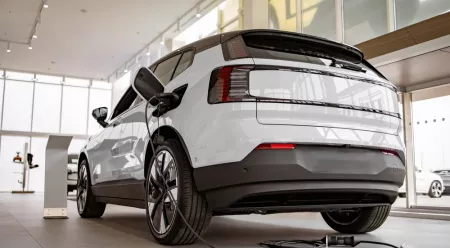
EV car dealership
Recommended

Will Chinese EVs in Canada Lead to Lower Car Prices for Canadians?

Canada will allow Chinese EVs starting March 1, lowering tariffs from 100% to 6.1% with import quotas, potentially driving down EV prices.

Other EV trends Canadians may see over the next few years 

Weitzman says several broader trends could shape the ownership experience over the next three to five years, including more standardized charging systems and new ways for EV owners to reduce costs. 

“I think the big trends are going to be Chinese EV availability in our market [and] standardizing charging connectors to NACS (North American Charging Standard) so that we have one consistent network and one consistent port in our market,” says Weitzman. 

A more unified charging system could make public charging simpler and reduce compatibility concerns for drivers switching between charging networks. 

Weitzman also says some EV owners are already starting to benefit financially from charging programs tied to clean energy initiatives and carbon credit systems. 

“You can literally start making money while you charge,” she says. 

She points to programs from companies like SWTCH and Grizzl-E that reward drivers for participating in managed charging programs or energy initiatives tied to clean fuel regulations. 

In the future, EV owners may also see utility companies offering incentives to pause charging during periods of high electricity demand, similar to programs already used with smart thermostats. 

“We do this with thermostats right now. In the future, we’ll be able to do it with EVs,” says Weitzman. 

Over time, she believes EVs could become more integrated into the broader energy grid, creating additional opportunities for drivers to save money beyond fuel costs alone. 

Used EVs could become more affordable for Canadians 

Another major shift could happen in the used vehicle market. As more Canadians lease and purchase EVs today, many of those vehicles will eventually enter the used market over the next several years. Weitzman says this could have a significant impact on affordability for many households, helping make EV ownership more accessible for drivers who cannot afford a brand-new vehicle. 

“If we can get EVs flowing into the used car market, it’s going to have a significant impact on lower middle income Canadians who need reliable, affordable vehicles to get to work and to move their families around.” 

A growing used EV market could also help normalize electric vehicle ownership across a wider range of income levels, especially as battery technology improves and more lower-cost models enter the market. 

What Canadians should consider before buying a new EV brand 

For drivers considering an unfamiliar EV brand, Weitzman says dealership support matters most. 

"You want to build a good relationship with your dealer," she says. 

She says that consumers should also consider: 

  • Charging access at home or work 
  • Winter range performance 
  • Warranty coverage 
  • Parts availability 
  • Local servicing options 
  • Resale value 

Charging convenience remains especially important. 

"The economics make the most sense for folks who can charge at their home," says Weitzman. 

She notes that while winter range loss still happens, modern EVs generally perform well in Canadian winters. 

"EVs start more reliably in the winter," she says. “You can precondition an EV, which means that it can be fully defrosted and de-iced before you even walk outside and you're not polluting by doing that. A remote start is awful. You're idling a car and you're burning [gas] and you're basically creating pollution as your car heats up.”   

Canada’s EV future 

Canada’s EV market is entering a major transition period. 

Over the next few years, Canadians could see entirely new automakers arrive alongside more affordable EVs, smaller city-friendly vehicles, and expanded competition across the market. 

Some brands, like Kia, have already committed to Canada-specific launches. Others, including BYD and several Chinese automakers, appear to be actively preparing for entry. 

For Canadian drivers, that could eventually mean more choice, lower prices, and easier access to electric vehicles than ever before. 

But while exciting new brands are on the horizon, experts say drivers who are already considering an EV may not want to wait indefinitely. 

"There are amazing vehicles already in our market," says Weitzman. 

Find the best car insurance rates today.

START A QUOTE
Insurance writer Caitlin

Caitlin McCormack

Caitlin specializes in personal finance, insurance, and consumer issues. With a strong foundation in journalism and years of experience writing for Canadian and international media outlets, she excels at making complex financial topics clear and relatable. Caitlin is a graduate of the journalism program at Toronto Metropolitan University.

Jennifer Hart

Jennifer Hart

Jennifer is the Digital Content Editor at Surex. Before transitioning to insurance and marketing, she built a journalism career in print and broadcast, freelancing for publications like Maclean’s Magazine and working in live production at Global News Toronto and CBC Toronto. As the industry evolved, she earned a Digital Media Marketing certification from George Brown College, allowing her to continue crafting compelling stories across digital platforms.
 

Share this article
  • Facebook
  • Linkedin
  • X

Related Articles

car accident scene
  • Auto

How Much Does Insurance Increase After an At-Fault Accident in Ontario?

Amid rising road fatalities, Ontario drivers' primary concern after an accident is how an at-fault determination affects their insurance premiums.

May 12, 2026
5 min. read
Read Article
New cars on truck
  • Auto

What Cars Are Made in Canada? Everything You Need to Know

Buying a Canadian-made vehicle is becoming harder as manufacturers move abroad, but several assembly plants still operate, mainly in Ontario. Discover which cars are still made in Canada!

May 11, 2026
6 min. read
Read Article
parking fire hydrant
  • Auto

Fire Hydrant Parking Regulations in Canada

This guide explains fire hydrant parking rules in Canada, including minimum distance requirements and penalties for parking too close.

Apr 27, 2026
6 min. read
Read Article
surex logo
  • Contact Us
    • support@surex.com
    • 1-855-MYSUREX
    • P.O. Box 100
    • Magrath AB T0K 1J0
  • Insurance
    • Auto
    • Home
    • Bundle
    • Business
    • Condo/Strata
    • Tenant
    • Farm
    • Travel
    • Motorcycle
    • Snowmobile
    • Trailer and RV
    • Boat
    • ATV
    • Landlord
  • Our Process
    • Why Surex?
    • How it Works
    • Find an Advisor
    • Carriers
    • File a Claim
    • FAQ
    • Our Insurance
    • Commission Disclosure
    • Payments
    • Valued Partners
    • Sitemap
    • Glossary
  • Company
    • About Us
    • Careers
    • Blog
    • Contact Us
    • In the News
    • Privacy Policy
    • Reviews

Copyright © 2011 surexdirect.com Ltd. All rights reserved.
® INSURANCE MARKETPLACE is a registered trademark of surexdirect.com Ltd.

Surex
Start an insurance quote now
START FREE QUOTE NOW

Surex uses cookies to enhance your browsing experience. By continuing to use the site, you agree to our Privacy Policy.